

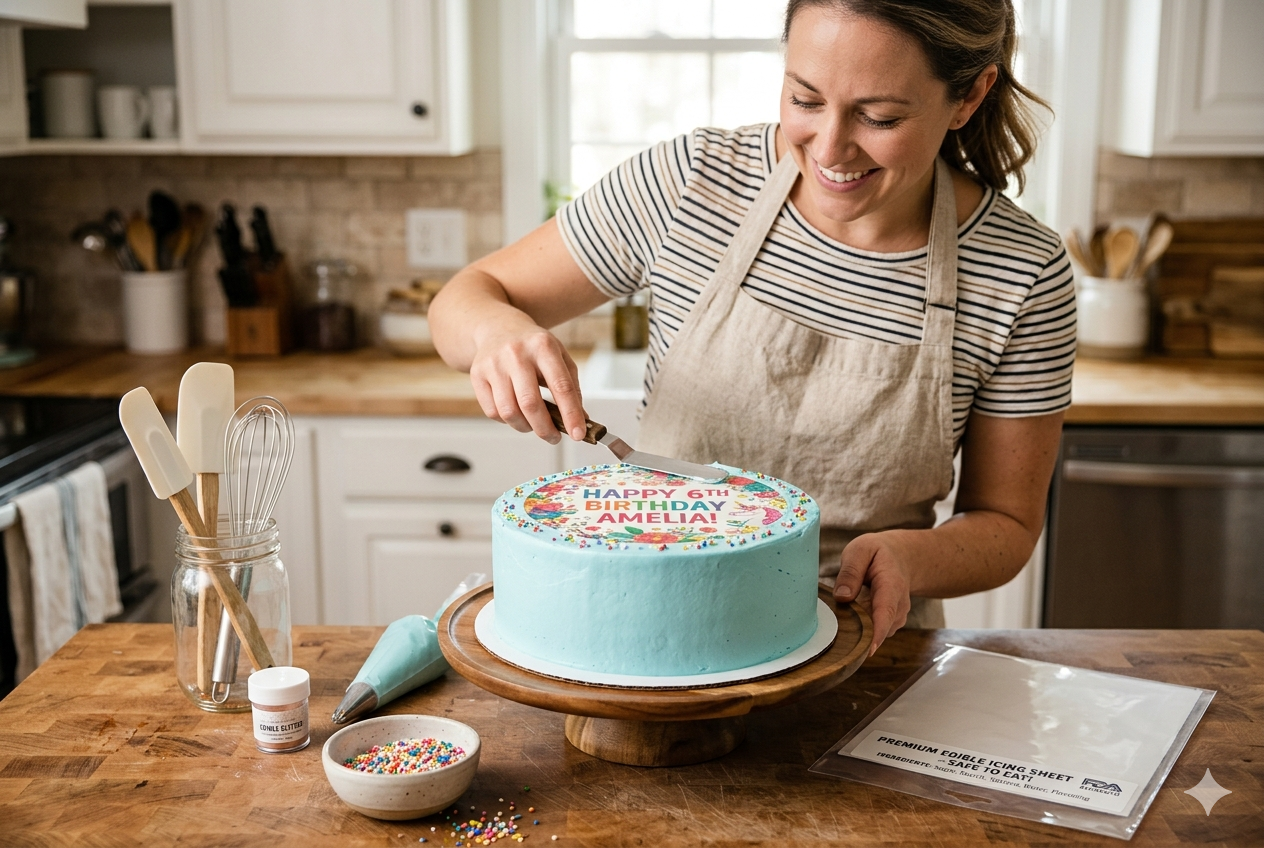
Are Edible Cake Sheets Safe? Everything You Need to Know
Are Edible Cake Sheets Safe?
Everything You Need to Know
From ingredients and food-safe inks to allergens, certifications, and children's safety — your complete, honest guide to edible sheet safety.
Yes — edible cake sheets are safe to eat. They are manufactured from food-grade ingredients, printed with food-safe edible inks, and regulated as food products in most countries including the United States, United Kingdom, and European Union. Millions of cakes are decorated with edible sheets every year without any safety concerns. That said, there are important things to know about ingredients, allergens, and specific dietary needs — and this guide covers all of it.
What Are Edible Cake Sheets Made Of?
Edible cake sheets — also known as frosting sheets, icing sheets, or edible icing paper — are made from a short list of simple, food-grade ingredients. There are no industrial chemicals, plastics, or synthetic materials involved. Everything in an edible sheet is also found in regular cake frosting, candy, and confections you'd buy at any grocery store.
Here are the core ingredients found in most edible icing sheets:
Good to know: The ingredient list for edible icing sheets is almost identical to the ingredient list for store-bought rolled fondant or candy melts. If you're comfortable eating fondant, you'll have no issues with edible sheets.
Are Edible Inks Safe?
This is one of the most common concerns bakers and parents raise — and it's a fair one. The answer is yes, food-safe edible inks are completely safe when used correctly and sourced from reputable suppliers.
Edible inks used in professional edible printing are formulated specifically for consumption. They are made from food-grade colorants — either naturally derived (from plants, beets, turmeric, spirulina, and other food sources) or synthetic food dyes that are approved for use in food by regulatory agencies like the FDA in the United States and the EFSA in Europe.
Natural vs Synthetic Edible Inks
Natural food colorants are derived from plant and mineral sources and are generally preferred by consumers seeking cleaner labels. Common examples include beet extract (red/pink), spirulina (blue/green), turmeric (yellow), and carotene (orange). These are the same colorants used in natural candy, yogurt, and beverages.
Synthetic food dyes (such as Red 40, Blue 1, or Yellow 5) are lab-produced colorants that have undergone extensive safety testing and are approved for use in food in regulated markets. While some parents prefer to avoid synthetic dyes for personal reasons, they are legally recognized as safe for consumption at the quantities found in food products.
Important: Never use regular printer ink on edible paper. Standard inkjet cartridges contain non-food-safe chemicals and are not approved for consumption. Only purpose-made edible ink cartridges from food-certified suppliers should be used for edible printing.
What Makes an Edible Ink Printer "Food Safe"?
A dedicated edible ink printer is a standard inkjet printer that has never been used with regular ink and is loaded exclusively with food-certified edible ink cartridges. Reputable edible sheet suppliers — including Custom Edible Sheets — use dedicated edible printers and food-grade inks, keeping their equipment entirely separate from any non-food printing processes.
How Are Edible Cake Sheets Regulated?
Edible sheets are classified as food products and are subject to the same food safety regulations as any other confectionery item. This means manufacturers must comply with strict standards around ingredients, labeling, facility hygiene, and testing.
What to look for: When buying edible sheets, check that the supplier mentions compliance with FDA, EFSA, or relevant local food safety standards. Reputable suppliers will clearly state this on their website or product packaging.
Allergens to Know About
While edible sheets are safe for the general population, people with specific food allergies need to check product details carefully. Here are the most important allergens to be aware of:
| Allergen | Present in edible sheets? | Notes |
|---|---|---|
| Gluten / Wheat | Usually No | Most icing sheets use corn or tapioca starch — naturally gluten free. Always verify with the specific supplier. |
| Dairy / Milk | Usually No | Standard icing sheets are typically dairy-free, but cross-contamination in shared facilities is possible. |
| Soy | Sometimes | Some edible sheet formulations use soy-based lecithin as an emulsifier. Check the label if soy is a concern. |
| Eggs | No | Eggs are not an ingredient in standard edible icing sheets. |
| Tree Nuts / Peanuts | Usually No | Not an ingredient, but cross-contamination in shared manufacturing facilities is possible. Check allergen statements. |
| Artificial Dyes | Varies | Some inks use FDA-approved synthetic dyes (Red 40, Yellow 5, Blue 1). Natural-ink options are available on request. |
Always ask your supplier for a full ingredient and allergen declaration if you are serving edible cakes to guests with known food allergies. A responsible supplier will always provide this information clearly and promptly.
Are Edible Cake Sheets Safe for Children?
This is the question we hear most often from parents — and the answer is yes, edible cake sheets are safe for children. They are made from the same food-grade ingredients found in candy, fondant, and confectionery your child already enjoys. There is nothing in a properly made edible sheet that presents a specific risk to children beyond the general considerations around sugar and food coloring.
Dietary Restrictions Guide
Edible sheets can work for many dietary lifestyles, but the answer often depends on the specific supplier and product. Here's a quick reference guide to the most common dietary considerations.
Gluten Free
Most standard edible icing sheets are gluten free, as they rely on corn starch or tapioca starch rather than wheat flour. However, if you're baking for someone with celiac disease, always request a formal confirmation from your supplier that the product is manufactured in a gluten-free facility, to rule out cross-contamination.
Vegan
Many edible sheets are vegan, but this depends on the source of the glycerin used in the product. Glycerin can be plant-derived (typically from palm oil or soybean oil) or animal-derived (from tallow). Ask your supplier to confirm the glycerin source if vegan certification matters to you. Custom Edible Sheets uses plant-based glycerin.
Kosher and Halal
Kosher and halal certified edible sheets are available from a range of suppliers. Look for the relevant certification marks on the product. Certification requirements for edible inks and sheet ingredients vary by certifying body, so verify with your specific supplier.
Diabetic Considerations
Edible icing sheets contain sugar and are not appropriate as a regular food for people managing diabetes. However, the thin layer used as a cake topper contributes a very small amount of sugar relative to the total cake — a standard edible sheet topper typically contains no more than 3–5g of sugar in total. As always, individual guidance from a healthcare provider should take precedence.
When in doubt, ask. A responsible edible sheet supplier will always be able to provide full nutritional information, ingredient declarations, and allergen statements. If a supplier cannot or will not provide this information, choose a different supplier.
Shelf Life and Storage
Edible icing sheets are shelf-stable products with a reasonably long lifespan when stored correctly. Here's everything you need to know about keeping your edible sheets in the best possible condition.
How Long Do Edible Sheets Last?
Unopened edible icing sheets typically have a shelf life of 6 to 12 months from the date of manufacture when stored under the right conditions. Some manufacturers produce sheets with shelf lives of up to 18 months. The expiration or best-before date should be clearly printed on the packaging — always check this before using.
After the best-before date, the sheet is unlikely to be unsafe to eat, but its quality degrades: it may become brittle and crack during application, and the printed colors may fade or appear less vibrant.
Ideal Storage Conditions
Store edible sheets in their original sealed packaging, in a cool, dry place away from direct sunlight, heat sources, and humidity. A cupboard or pantry shelf is ideal. Do not refrigerate or freeze unopened edible sheets — the temperature fluctuations introduce moisture that can damage the sheet before it's even been opened.
Once opened: Use the edible sheet as quickly as possible — ideally within the same session. If you need to store a partially used sheet, reseal it tightly in its original backing or a zip-lock bag and use it within 24–48 hours. Humidity will cause quality to decline rapidly once the seal is broken.
How to Buy Edible Sheets Safely
The safety of an edible sheet product depends almost entirely on the supplier you choose. Here's what to look for when selecting an edible sheet provider.
Choose a Supplier That Uses a Dedicated Edible Printer
The most important safety factor is ensuring your supplier uses a printer that has never been used with regular (non-edible) ink. A reputable supplier will state this clearly — either on their website or when you ask. A printer that has previously been used with standard cartridges can contaminate edible sheets with non-food-safe chemicals, even after cleaning.
Look for Food-Safe Certification Claims
Trustworthy suppliers will reference compliance with FDA standards (in the US), EFSA or EU food law (in Europe), or equivalent local food safety regulations. Look for mentions of GRAS-approved ingredients, food-certified inks, and allergen declarations.
Ask for an Ingredient List
Any professional edible sheet supplier should be able to provide a full ingredient declaration for their icing sheets on request. If they cannot — or if they seem reluctant — that is a significant red flag. You should always know exactly what is in a food product you intend to serve to your guests or family.
Avoid DIY Edible Printing Without the Right Equipment
If you plan to print your own edible sheets at home, you must use a printer that has been completely dedicated to edible printing from the start — never used with regular ink — along with food-certified edible ink cartridges purchased from a reputable food supplier. Never attempt to convert a regular printer to edible printing, as residual standard ink in the ink lines and cartridge bay is nearly impossible to fully remove.
Frequently Asked Questions
Yes. Edible cake sheets are made entirely from food-grade ingredients — typically sugar, modified starch, glycerin, and water — and printed with food-certified edible inks. They are regulated as food products and are safe for consumption by adults and children when purchased from a reputable, food-certified supplier.
Yes — edible cake sheets are safe for children and are used on birthday cakes for young children all the time. They are made from the same confectionery-grade ingredients found in candy and fondant. If your child has food allergies, always check the ingredient and allergen declaration with your supplier before serving.
Most edible icing sheets are gluten free, as they are made from corn or tapioca starch rather than wheat. However, cross-contamination during manufacturing is possible. If you are serving someone with celiac disease, request written confirmation from your supplier that the product is made in a dedicated gluten-free facility.
Edible icing sheets are typically made from sugar, modified corn or tapioca starch, glycerin, water, and a small amount of vegetable shortening. The image is printed using food-certified edible inks made from approved food colorants — either natural plant-based dyes or FDA/EFSA-approved synthetic food colors.
Many edible cake sheets are vegan, but it depends on the source of glycerin used. Glycerin can be plant- or animal-derived. Ask your supplier to confirm — Custom Edible Sheets uses plant-based glycerin. The inks used for printing are generally vegan as they do not contain animal-derived colorants.
Yes. Edible icing sheets typically have a best-before date of 6 to 12 months from the manufacture date. After this, the sheet may become brittle or the colors may fade, but they are not typically unsafe to eat past the date. Always check the expiry date on the packaging before use, and store sheets sealed in a cool, dry place away from light and humidity.
The entire edible sheet — both the sheet itself and the printed image on top — is fully edible. You do not need to remove the image before eating. The ink sits on top of the sugar-based sheet and is completely food safe. Simply eat it as you would any other part of the cake decoration.
Order Your Custom Edible Sheets with Confidence
Every edible sheet from Custom Edible Sheets is printed with food-certified edible inks on a dedicated edible printer — safe for the whole family, including the little ones.
Shop Custom Edible Sheets →